

Thinking about LASIK? You’re not alone. Sometimes, you’re just tired of wearing glasses or contact lenses, and simply just want a change.
What is LASIK?
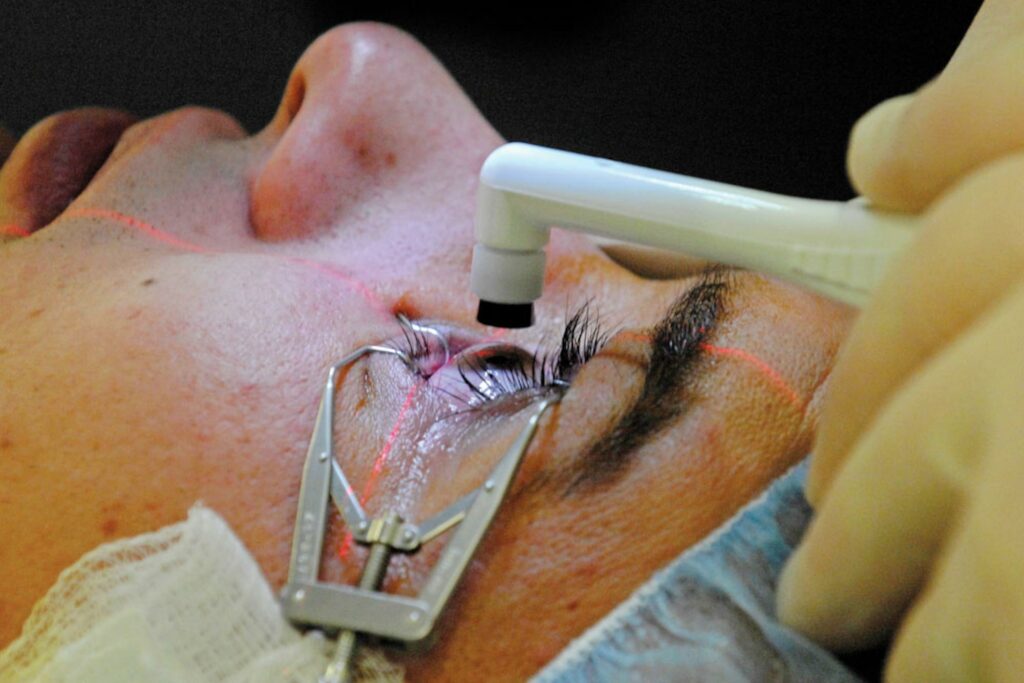
LASIK stands for Laser-Assisted In Situ Keratomileusis, which is a type of laser eye surgery that corrects vision problems like nearsightedness, farsightedness, and astigmatism. During the procedure, an eye surgeon uses a laser to reshape the cornea, the clear front surface of the eye. This allows the light to focus correctly on the retina for more clear vision.
Who is a good candidate vs. Who isn’t?
LASIK may be the right procedure for many, but not for all. However, you may be a good candidate if you:
- Are 18+
- Have a stable prescription for at least one year.
- Have healthy eyes and healthy corneas.
- Are in good health overall.
While the criteria for being a good LASIK candidate are broad, the procedure may not be recommended if you:
- Have severe dry eye disease.
- Have very thin corneas.
- Are diabetic or have eye conditions that may affect healing.
- Are pregnant or breastfeeding.
These are some of the more common reasons why LASIK may not be the best option. However, every patient’s eyes and medical history are unique. A consultation with your optometrist is very important to determine whether LASIK is an appropriate choice for you.
What happens during LASIK?
The procedure is quick and usually takes about 10 to 20 minutes for both eyes.
Here’s what you can expect:
- Numbing eye drops are placed in your eyes.
- A thin flap is created on the cornea.
- A laser reshapes the cornea based on your prescription.
- The flap is carefully repositioned to heal naturally.
Fun fact: most people say that they just feel pressure rather than pain during the procedure!
Does LASIK hurt and are there any risks?
Although everyone’s experiences are different. Almost all patients say that LASIK is not painful. During the procedure, they use numbing eye drops so that patients don’t feel pain during surgery. However, it’s common to experience some burning, watering, light sensitivity, or a gritty feeling for the first day after your surgery. LASIK is considered a safe and effective procedure but like any surgery, it does carry some risks.
Possible side effects include:
- Dry eyes.
- Glare around lights, especially at night.
- Light sensitivity.
- Temporary blurry vision.
Recovery: what to expect
Finally! The recovery! LASIK tends to work quickly. In fact, many patients notice clear vision within 24 hours, but vision may continue to sharpen over time.
For a smooth recovery:
- Use your prescribed eye drops exactly as directed.
- Avoid rubbing your eyes.
- Wear sunglasses outdoors if your eyes are sensitive to light.
- Make sure to attend all follow-up appointments with your optometrist and/or surgeon.
Note: dry eyes are common after LASIK but usually improve over time. Artificial tears can help keep your eyes comfortable.
Frequently Asked Questions:
- Will I still need glasses?
Maybe. LASIK corrects your current prescription, but it doesn’t stop your eyes from naturally changing with age. Many adults over 40 will still need reading glasses.
- Is LASIK covered by OHIP?
No. LASIK is considered an elective procedure and is generally not covered by OHIP.
- How long does LASIK last?
The changes made to the cornea are permanent. However, your vision can still change naturally over time.
- Can LASIK treat astigmatism?
Yes. LASIK can correct many cases of astigmatism, along with nearsightedness and farsightedness.
Bottom Line:
LASIK has helped millions of people enjoy clear vision with less dependence on glasses and contact lenses. If you’re considering LASIK, we’re here to answer your questions, explain your options, and guide you through every step of the process.
For more information, concerns or inquiries, or to book your next eye exam, get in touch with inFocus Vision Care. It all begins with you taking care of your eyes!